

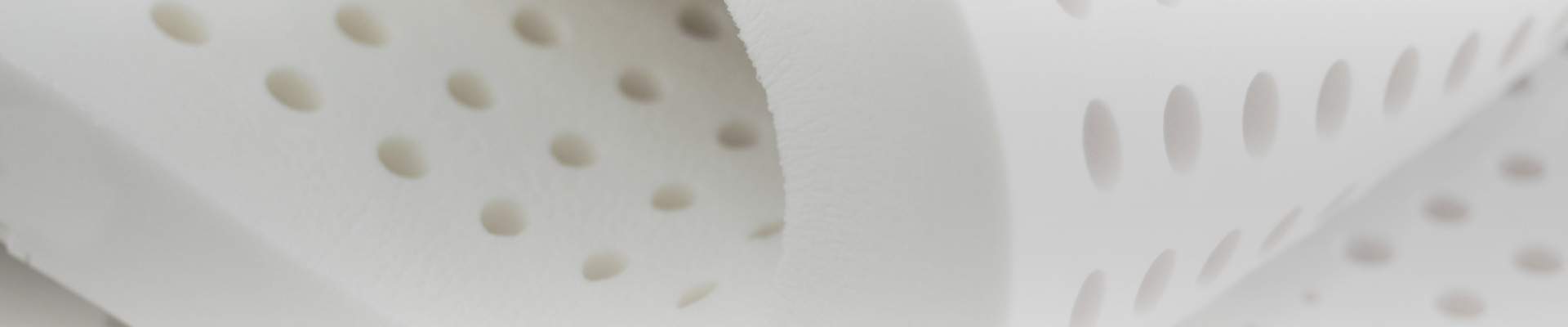
Memory Foam
Viscoelastic foam, also calls memory foam, it's a type of high-quality material with pressure release and slow rebound performance. Memory foam is foamed from several special polymers with slow-rebound properties. As a topper on mattresses or a pillow, It fits to the body’s shape, covering and supporting the users and relief pressure points. In addition, memory foam offers excellent shock absorption and stability, making it suitable for applications such as shoes padding, medical mattresses, headrests, high-class packaging, and seat padding.

Foam Description
Slow-Rebound Foam is made from specialized polymer materials and features a slow recovery characteristic. When a person lies on it, the foam gradually conforms to body contours based on pressure points and body temperature, evenly distributing pressure and effectively reducing pressure on areas such as the shoulders and hips, thereby improving overall comfort and sleep quality. In addition, slow-rebound foam offers good shock absorption and stability. It is commonly used in medical supports, headrests, bedside guard rails, and seat cushioning layers to provide additional protection and support. Due to its material properties, it is not recommended as a primary large-area structural support and is typically combined with other support foams (such as high-density foam or rebonded foam) in multi-layer mattress or seating designs.
Key Advantages of Viscoelastic Foam
Foam Specification
Part No. | Density (kgf/m3) | Hardness(Asker F) |
|---|---|---|
| SL30 | 30±3 | 10±5 |
| SL36 | 36±3 | 10±5 |
| SL39 | 40±3 | 10±5 |
| UR52 | 50±4 | 10±5 |
| UR84 | 60±4 | 10±5 |
| UR70 | 70±4 | 10±5 |
| UR88 | 80±5 | 10±5 |
| PR43D | 43±3 | ~8 |